"We are grateful to the Creighton family for entrusting us with the opportunity to build on their legacy," Jim Oliver, chief operating officer of Heritage Golf Group, said in the company's October 26, 2026 announcement that it had bought Fox Hollow Golf Club.
With that sale, the two golf courses on Robert Trent Jones Parkway in Trinity now run under two different ownership models. Fox Hollow, at 10050 Robert Trent Jones Parkway, belongs to an owner-operator with a home office outside Washington, D.C., and 51 clubs across the country. Heritage Springs, at 11345 Robert Trent Jones Parkway, belongs to its homeowners, because buying a home there includes equity ownership in the course.
When you buy a home on a Trinity fairway this winter, you are also choosing who pays to keep the course in shape and who decides what happens to it next. On this one parkway, the answer depends on which side of the road your lot is on.
Fox Hollow now belongs to a company building a Tampa Bay cluster
Fox Hollow is one of the last courses designed by Robert Trent Jones Sr. It opened in 1994 and has a par-71 layout with five sets of tees, a 15,000-square-foot clubhouse, a practice facility with 25 hitting bays and a 10,800-square-foot putting green. The course has been ranked on Golf Digest's list of the Top 75 Courses Accessible to the Public in Florida.
Heritage Golf Group's announcement says Fox Hollow is its 51st property and its fourth acquisition in four months, and that it brings the company's Florida total to 14 clubs. The company described the purchase as part of a regional plan. Fox Hollow is within ten miles of two clubs Heritage already owns, The Club at Cheval and TPC Tampa Bay. The release says the public access at Fox Hollow and TPC Tampa Bay gives Heritage a chance to draw traveling golfers and promote the area as a golf destination.
The company also put its first investment on the calendar. Heritage said capital work would begin in its first week of ownership, starting with overseeding to improve playability before Florida's peak golf season. It said longer-term renovations are being evaluated and will be guided by "the property's needs, operational leadership, and Member feedback." Heritage also runs the Heritage Plus Network, a reciprocal program that golf members can add through their home club to play at participating Heritage clubs.
Heritage's other Tampa Bay area purchases show how it spends
Heritage's earlier acquisitions in the region show what a new owner with outside capital tends to do. When it bought The Club at Cheval from LKJ Management in April 2025, it announced a multi-million-dollar course project. The plan covered excavating and restoring the greens, consolidating and resizing bunkers, enlarging tee boxes and redesigning the practice facility. During the work, Cheval golf members could play other Heritage clubs nearby, including TPC Tampa Bay.
In 2024 the company bought Legacy Golf Club in Lakewood Ranch, made it a private course within Lakewood Ranch Golf and Country Club, and announced a multi-million-dollar renovation.
In both cases Heritage put in the money quickly and chose a format to fit the club. Cheval stayed a private club inside a gated community, while Legacy became one course in a multi-course private club. For Fox Hollow, the company's announcement emphasizes public access and traveling golfers.
The Champions' Club lines the fairways and runs its own clubhouse
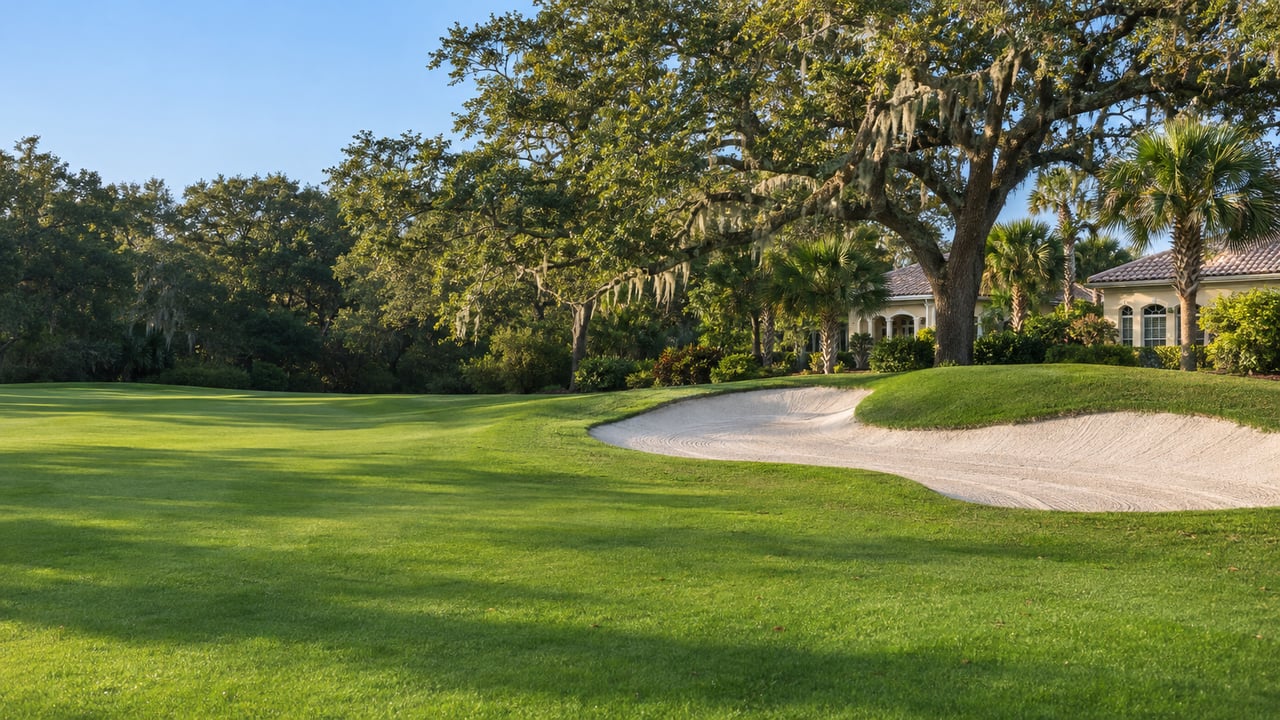
The homes most directly affected by the sale are in The Champions' Club, a gated community whose estate homes sit along Fox Hollow's fairways. Its residents have their own private clubhouse, a Mediterranean-style building with a pool and spa, a tennis pavilion, a fitness center and an outdoor grill.
The pool, tennis pavilion and fitness center belong to the residents' club. The fairways behind the homes belong to Fox Hollow, and decisions about the course now rest with Heritage, including the condition of the greens, the timing of any renovation and how many public and traveling golfers come through.
Heritage's first announced step is investment. As the course owner, it scheduled the overseeding for its first week and said it is weighing longer-term renovations. For a buyer on these fairways, the question is how the new owner's plans for public play and regional golf tourism fit the way they want to use the course and the view.
Heritage Springs owns its course, and its own plan lists the costs
Up the parkway, Heritage Springs is a gated, deed-restricted 55+ community with a clubhouse, restaurant, pool, spa, tennis courts and fitness center. Its par-71 course was designed by Ron Garl and opened in 2000. It has six sets of tees from 3,900 to 6,024 yards, more than 60 bunkers and water on 17 holes. The course is private, for residents and their guests.
The community's 2026 golf handbook explains who pays for what. Golf fees from members, residents, tenants and guests help cover the course's operating costs. Longer-term improvements and maintenance are paid from the association's reserves. When the course needs major work, the money comes from the homeowners themselves.
The association plans for that openly. Its April 2025 strategic plan sets a goal of building larger reserves as the community enters its 26th year, so that long-term repairs and future improvements are funded ahead of time. The same document reports a 13.8 percent increase in association fees for 2025 and a reserve target raised from $1 million to $1.5 million. It also lists a $2,315 capital contribution paid by new home buyers as of 2025. These are 2025 figures from the association's own planning document. They are general information, not legal or financial advice, so confirm the current numbers with the association and your own advisers before you rely on them.
Golf fees changed in 2025 too. The plan says trail fees now have separate single and couple rates, prepaid and daily green fees went up, and guest fees rose to widen the gap between member and guest pricing. The plan also names the golf course and dining as two of the community's largest assets and says they may be underused. It treats the full set of amenities, including a private golf course, as a way to raise revenue for the reserves.
At Heritage Springs, the people who play the course and live beside it set its priorities and share the cost of carrying them out, so a buyer gets a voice in those decisions along with a share of the bill.
The plan also notes that members from The Champions' Club and the Cypress Run Association and Golf Club buy homes in Heritage Springs when they downsize. Some households have lived under both models, starting on the Fox Hollow fairways and later moving to the resident-owned course.
Seven Springs is a third model nearby
Seven Springs Golf and Country Club works another way. GreatLIFE Golf added Seven Springs to its management portfolio in April 2025, according to Golf Inc., which described the club as semi-private, with both memberships and daily-fee play. The club says public tee times are available every day and membership is optional. For a golfer who wants access without tying it to a home purchase, this setup keeps the course and the house separate.
What October's market gives a course-side buyer
The latest Pasco County numbers give buyers some room to ask these questions before they commit. The Pinellas REALTOR Organization's October 2026 report for Pasco County shows these figures for single-family homes:
- Median sale price: $368,000, down 0.4 percent from October 2025
- Active listings: 3,300, up 4.8 percent from a year earlier
- Supply: 4.4 months, up 18.9 percent from a year earlier
In the same month, sellers received a median of 95.6 percent of their original list price, and the median time from listing to closing was 90 days.
These are countywide figures, not Trinity-only figures. They describe a market with more choice than a year ago and a typical deal that takes about three months from listing to closing. For a home on a golf course, that time is useful for gathering the documents that show who controls the course. In Heritage Springs, that means the current reserve plan and the current golf fee schedule. In The Champions' Club, it means current dues, what the HOA covers, and whatever membership options Heritage Golf Group sets up for Fox Hollow as its first season as owner gets underway.
If you are weighing a fairway home in Trinity this season, the Kathie Lea Team can help you compare the Fox Hollow and Heritage Springs sides of Robert Trent Jones Parkway and collect the course and community documents before you make an offer. Start Your Home Search with us and tell us which course you want behind your house.